It has been over 20 years since IBM’s Deep Blue played Gary Kasparov. In 2016, Google’s AlphaGo beat Lee Sedol 4 to 1. Many people think of AlphaGo’s achievement as an incremental improvement over IBM’s Deep Blue, assuming Go is a somewhat more complex game. Others attribute a lot of AlphaGo’s success to faster CPUs / GPUs and more memory (they are partly right).
However, AlphaGo is a quantum improvement over Deep Blue. Also, AlphaGo technology can be used in applications outside of gaming. In fact, improvements relating GPUs, Deep Learning and AlphaGo can be used in numerous business applications (e.g. Wealth Management, Operations, Pricing & Promotions and Gamification).
First lets understand the differences between Chess and Go. They are both two player board games, where the players take turns. Other comparisons include (source):
| Game | Board size (positions) | Average turns / piles | State-space complexity | Game-tree complexity |
| Tic-tac-toe | 9 (3×3) | 9 | 1E+3 | 1E+5 |
| Connect Four | 62(7×6) | 36 | 1E+13 | 1E+21 |
| Chess | 64(8×8) | 70 | 1E+47 | 1E+123 |
| Go | 361(19×19) | 150 | 1E+170 | 1E+360 |
“The search space in Go is vast… a number greater than there are atoms in the universe,” Google wrote in a January 2016 post about the game.
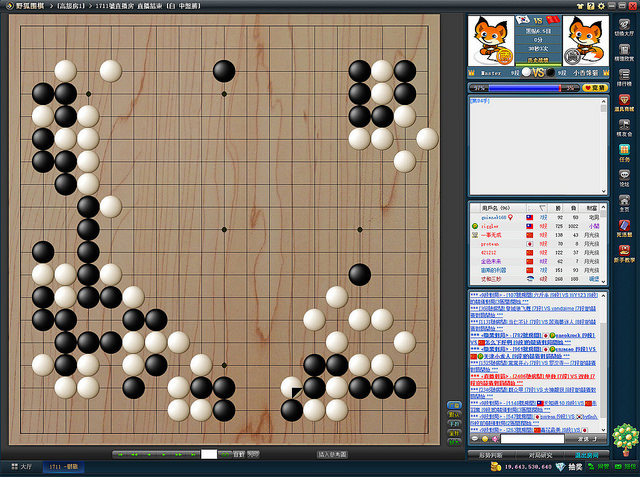
Beyond the quantitative comparison of Chess and Go, there is a qualitative difference, in how Deep Blue and AlphaGo were built, trained and worked.
Development:
- Deep blue used hard coded functions (at least for feature engineering). This requires a lot of development and testing.
- AlphaGo uses Monte Carlo tree search (particularly it uses minimax tree search with reinforcement learning). This requires a lot less development effort and testing.
Learning:
- Deep Blue was tested by playing against humans.
- AlphaGo Zero learned by playing against itself (do Einstein’s thought experiments come to mind?). This is a dramatic reduction in cost and time-to-market.
Running:
- IBM never claimed Deep Blue in any way resembles the human brain.
- AlphaGo on the other hand comes closer to mimicking the human brain
- It has demonstrated creativity during game play
- It is able to pair with a human player (demonstrating AI’s ability to collaborate)
- AlphaGo is also extremely computing and power efficient
Where can GPUs, Deep Leaning, AlphaGo be used in business?
Wealth Management: Advanced mathematics and statistics has been used in trading and finance for many years. While the latest advancements in reinforcement learning present significant opportunities for professional wealth managers; I believe that consumerization of wealth management (aka Direct Investing) can be the biggest winner. AI can be great tool for optimizing return, and in addition AI can help individuals better manage risk. Continuing improvements in computing and power efficiency will increase consumerization of wealth management.
Operations: Much of what was considered operations research is now considered AI. AI will continue to drive operational efficiency.
Pricing & Promotions: Online and Mobile advertising uses AI optimizes. Airlines, tourism sector implement dynamic pricing. These sectors and applications will continue see increasing adoption of AI.
Gamification: The success of AI in Go and Chess, may lead many to believe that AI can have a revolutionary impact on gamification (this is at least partially true). It is important to note that both Go and Chess are fully observable (compared to many real world scenarios that are partially observable) and zero sum games (real world problems are a combination of zero sum and non-zero sum games). Successful gamification would often require either adopting algorithms or reframing the game.
 My Views - Application of AI & Programming