How can I learn AI? Where do I start?
Follow this site 🙂 The site is dedicated to providing an overview of AI, current application and emerging trends / innovations.
Assuming you are new to AI, and are coming from a Software Development / Architecture background or are a business savvy technology professional. I recommend focusing on Machine Learning first, and specifically Supervised Learning. It is important to learn where Classification and Regression can be used, and also understand the differences between Accuracy, Precision and Recall.
Tensorflow Playground (a shallow and deep neural network) is a good place start experimenting with classification.
Some of best online learning resources includes Udemy, Coursera and Udacity.
- Udemy provides many courses that provide a quick overview
- Coursera is often focused on more pragmatic applications
- Udacity provides a good overview of theory / mathematics.
“Artificial Intelligence: A Modern Approach” is an excellent and comprehensive resource on AI. “Deep Learning for Natural Language Processing” is an excellent reference / handbook on NLP.
What programming languages and tools should I use?
The best way to learn AI (or the only way to learn AI) is to get hands on experience.
Below is a list of languages and tools I recommend:
- Tensorflow Playground will help you familiarize you with machine learning. However, what you can you do on the playground is limited.
- Python is the language of choice. It is a simple yet very powerful language, supporting procedural, functional and object oriented paradigms.
- Jupyter Notebook is an excellent interactive programming and note taking environment. The tool provides data pre-processing, feature engineering, modelling, visualization and documentation functionality.
- Scikit-learn is the library of choice for machine learning (at least to get started).
- NLTK is the best starters tool kit for natural language processing.
- NumPy and Pandas are also must have libraries.
- Tensorflow is a great framework deep learning. Using Keras with Tensorflow can significantly reduce development effort.
Where is AI used today (Business Perspective)?
AI is used in 3 major areas in business:
- Business Intelligence & Analytics: This one of the areas where there has been a lot of investment (especially in enterprises). Many data scientist are employed in this space. The business case in this space in space is based on increasing accuracy and reducing the need for statistical labor.
- AI Applications: This space is dominated by big players and some start-ups. Sample applications include Search Engines, Speech Recognition, Chatbots and Speech Synthesis. The large companies (e.g. Google, Microsoft) tend to focus on horizontal offerings while start-ups tend to focus more on horizontal offerings (e.g. Kasisto). Leading edge AI expertise is generally required for successful execution.
- Augmenting Mobile & Web Applications: This is an area where AI is under-utilized and there is tremendous growth potential. Success is less dependent on leading edge AI knowledge and assets, but more dependent on successful integration of AI with Application Development and domain expertise. Search has been successfully integrated into many Web & Mobile Applications to date.
How can Software Developers benefit from the AI boom (Individual Perspective)?
Applications and Software Development is changing rapidly due to AI. There are three major opportunity areas:
- AI Systems: E.g. smart and self-driving cars fall into this trillion dollar market. Many are pursuing advanced and nano degrees to pursue opportunities in this space.
- AI Software: E.g. chatbot development is an exciting area, and a rapidly growing one. Chatbots development promises to automate, reduce cost and eventually improve quality of customer service and sales.
- Application and Software Development: AI is rapidly changing this space. SDLC is changing fast, starting with testing. Application are evolving quickly by incorporating AI, and the nature of applications itself is changing. For many Software Development professionals this may be the best areas of focus. Additional information can be found in this blog post.
Do I need lots of proprietary data to develop an AI product / solution?
Having lots of data is an advantage, and Deep Learning also requires lots of data. However, this does not always mean that you have to have lots of proprietary data to develop an AI product / solution.
Some possible alternatives are:
- Obtain data from other sources and / or synthesize data
- Use less data hungry algorithms such as Random Forests and Boosting
- Apply transfer learning
- Acquire data as you go
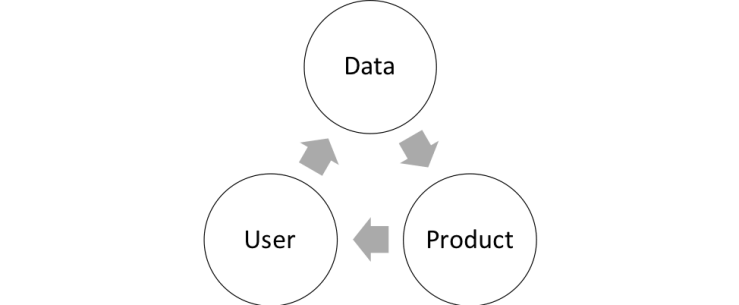
This topic is discussed in greater detail in the following blog post.
Do I need a big data platform to develop AI products / solutions?
AI products / solutions can be developed prior to instantiating a complete state of the art big data platform. It is important to understand differences in Big Data vs. Machine Learning. However, if you are building a Data Driven Enterprise then you can build both Big Data and AI in parallel to gain a significant competitive advantage.
Machine Learning vs. Statistics: What is the difference?
These fields are very similar, and are increasingly becoming more so as they both continue to adopt advancements in the each others areas.
However, one key difference is that Machine Learning is a computer science specific view, where programmatic approach to learning is applied. Whereas, Statistics is a mathematical view where greater mathematical rigour is applied.
Can AI match or exceed human intelligence?
AI already competed won against humans in many applied intellectual tasks. Some of the most popular examples are
- Chess
- Jeopardy
- Go
Yet even these advanced system unable to infer nor extrapolate knowledge. Many experts coin the ability to mimic human intelligence as Artificial General Intelligence, which is thought to be 30 to 40 years away.
Can AI replace humans?
AI is likely to destroy human population if it is allowed to have access to / control weapons (especially weapons of mass destruction). However, this is more likely to happen as result of an error, as opposed to a well orchestrated plan by AI to take over the world.
Despite the fact that Artificial General Intelligence is not likely to happen for another 30 to 40 years, for AI sustain itself it needs to able to manage a complete ecosystem. This type of access and control by AI is much further away, and humans are unlikely to make this type of error. It is relatively easy develop kill switches that will prevent AI from ever achieving this goal.
Another reason that this may never happen is intelligence augmentation. I.e.
Human + AI >> AI
Follow @Joe_Anandarajah My Views - Application of AI & Programming